What the seller cites
The sales page lists eleven references with publisher logos and states that the studies were not done on Nervesignal, amounts may differ and they do not establish its efficacy. It also says the publishers do not endorse or affiliate with Nervesignal.
| Reference | What it is | What it means for Nervesignal |
|---|---|---|
| Ziegler et al., 2006, Diabetes Care | SYDNEY 2: oral alpha-lipoic acid in diabetic polyneuropathy (PubMed) | 181 people, 600-1,800 mg/day for 5 weeks; 600 mg worked as well as higher doses (LPI summary). Nervesignal’s ALA dose is unknown. |
| Mijnhout et al., 2012, Int J Endocrinol | Meta-analysis of ALA in diabetic neuropathy (PMC) | 4 trials, about 650 people. IV 600 mg clinically relevant; oral 600 mg of unclear relevance; all studies manufacturer-sponsored. |
| Sima et al., 2005, Diabetes Care | Acetyl-L-carnitine in chronic diabetic neuropathy (MEDLINE) | 1,257 people, 52 weeks, 500 or 1,000 mg three times daily of acetyl-L-carnitine. Nervesignal lists L-carnitine. |
| Cameron et al., 2001, Diabetologia | Vascular factors in diabetic neuropathy | A review of how blood-vessel changes affect diabetic nerves; supports the “flow” idea in general, not butcher’s broom. |
| Vanscheidt et al., 2002, Arzneimittelforschung | Butcher’s broom extract in chronic venous insufficiency (PubMed) | A vein-disease trial; not a nerve study. |
| Hernández-Camacho et al., 2018, Front Physiol | CoQ10 in aging and disease | A review; no neuropathy trial. NCCIH lists no nerve evidence. |
| Hewlings & Kalman, 2017, Foods | Curcumin review (PMC) | A broad review; NCCIH says evidence is not strong enough for any health purpose. |
| de Baaij et al., 2015, Physiol Rev | Magnesium in man | A physiology review; no Nervesignal-relevant dose data. |
| Abbasi et al., 2012, J Res Med Sci | Magnesium and insomnia in older adults (PubMed) | A small trial using 500 mg a day; Nervesignal has 80 mg. |
| Hanewinckel et al., 2016, Neurology | Prevalence of polyneuropathy (repository) | Definite polyneuropathy in 5.5%; describes the problem, not a solution. |
| NINDS | Peripheral neuropathy overview (NINDS) | Explains causes and proven treatments; does not recommend these supplements. |
What the list leaves out
NATHAN 1, the longest oral lipoic acid trial (four years, 421 people, 600 mg a day), found no difference on its main composite endpoint, though some secondary measures improved (LPI). The Linus Pauling Institute also notes that most lipoic acid neuropathy work came from one German group funded by a lipoic acid manufacturer.
The pattern
- Eleven references: three on nerve outcomes (ALA twice, acetyl-L-carnitine once), the rest reviews or other conditions.
- The nerve trials used 600 mg ALA or 1.5-3 g acetyl-L-carnitine.
- None tested the formula.
How to read supplement references
- Was the study on this product, or one ingredient?
- Same form? (acetyl-L-carnitine is not L-carnitine.)
- What dose, compared with the label?
- Did it measure nerve symptoms, or something else?
The NIH Office of Dietary Supplements has a plain-English guide.
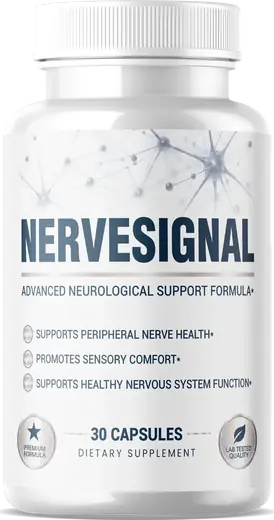
Considering Nervesignal? Two bottles are $158 plus shipping; six are $294 ($49 each) with free US shipping and three bonus guides. Only unopened bottles can be refunded, the seller asks for at least three months of use, and alpha-lipoic acid can lower blood sugar, so read the safety guide first.
Order Nervesignal From $49/BottleQuestions
Has Nervesignal been clinically tested?
No published trial of the finished formula exists, as the seller acknowledges.
Is alpha-lipoic acid proven for neuropathy?
It has modest evidence at 600 mg, strongest for IV use; long-term oral results were mixed.