Treatment claims
Supplements cannot legally claim to treat disease, and the FDA does not approve them before sale (FDA). Nervesignal’s page says plainly it is not a neuropathy treatment, which is a good sign.
Fake approval badges
An “FDA approved” seal on a supplement is false; the FDA does not approve supplements. Nervesignal’s artwork set includes one; we do not show it.
The checklist, applied
| Red flag | Nervesignal |
|---|---|
| All ingredients listed? | Yes, 6 |
| Individual amounts? | Only magnesium (80 mg) |
| Doses match trials? | No: ALA, carnitine, curcumin likely far below |
| Right ingredient forms? | L-carnitine, not acetyl-L-carnitine |
| Interactions disclosed? | Yes, blood sugar and blood thinners |
| Inflated list price? | Yes, $179 per bottle |
| Unsourced stats? | “96% order 6 bottles” |
| Refund fine print? | Unopened only; 60 days vs 3-month timeline |
| Studies on product? | None; seller admits it |
Before you buy any nerve formula
- Get a diagnosis and B12 test.
- Look up each ingredient on NIH ODS or NCCIH.
- Check the form and dose against the trials.
- Show the label to your pharmacist (interaction digest).
- Read the refund policy, not just the badge.
See The 575 mg blend, worked out.
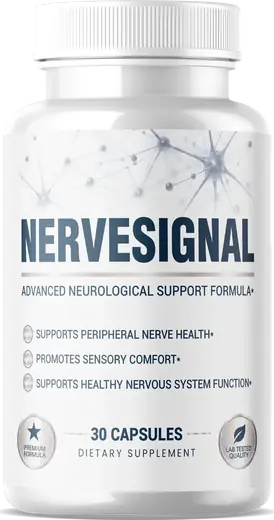
Considering Nervesignal? Two bottles are $158 plus shipping; six are $294 ($49 each) with free US shipping and three bonus guides. Only unopened bottles can be refunded, the seller asks for at least three months of use, and alpha-lipoic acid can lower blood sugar, so read the safety guide first.
Order Nervesignal From $49/BottleQuestions
What is the biggest red flag on Nervesignal?
A six-ingredient blend where magnesium glycinate may take most of the space.
What does it do well?
Clear safety messaging and an honest ‘not a treatment’ statement.